
DIY Maintenance vs. Calling a Professional: Where the Line Actually Falls

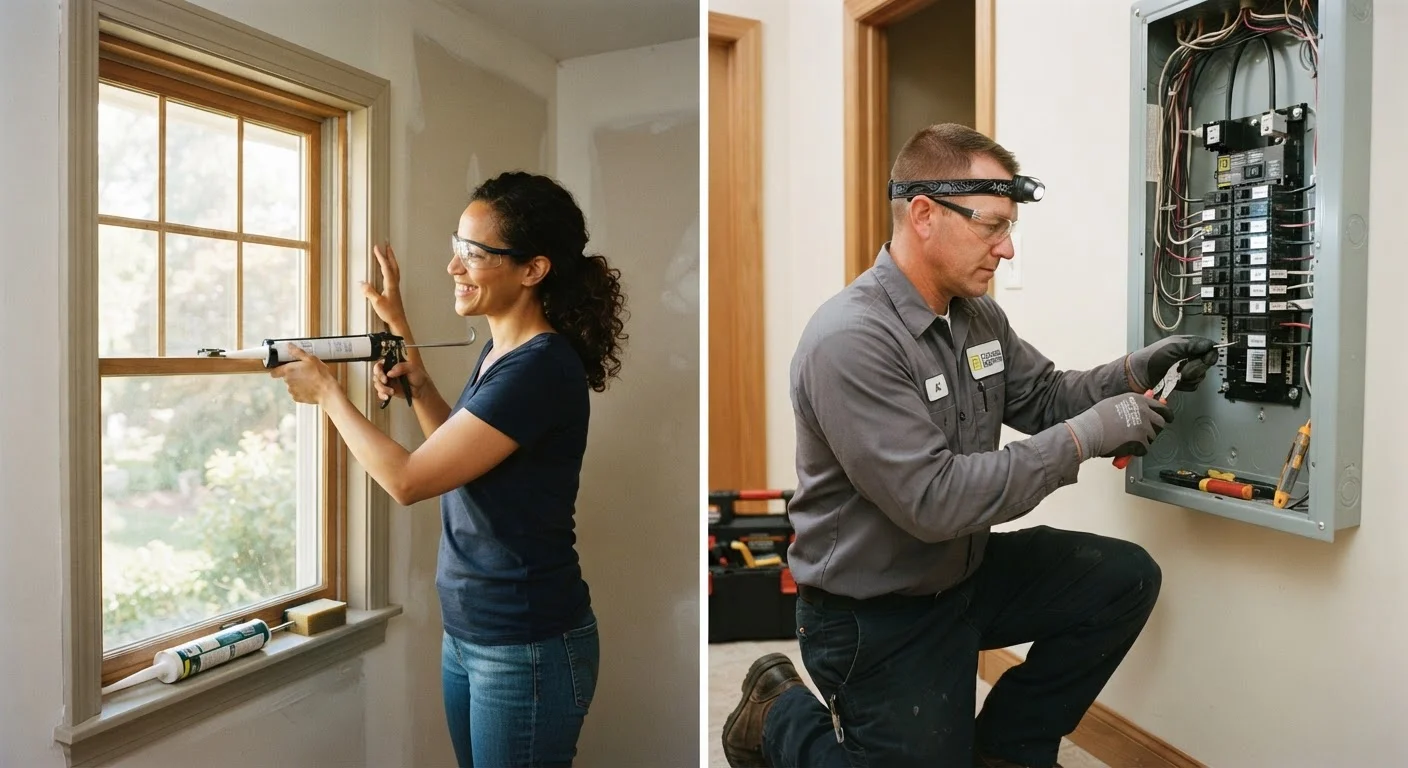
Photo: AskSpecialist.net editorial
Key Takeaways
- Many routine maintenance tasks - caulking, filter changes, gutter cleaning - are safely handled by homeowners without special licensing.
- Electrical panel work, gas line repairs, and structural modifications typically require licensed professionals and permits by law.
- Skipping permits on regulated work can create legal liability and complicate future home sales.
- Your skill level, available tools, and local code requirements should all factor into the DIY-or-hire decision.
- Even capable DIYers should know when a task exceeds safe boundaries and call in a qualified tradesperson.
The Real Question Behind Every Home Repair
Every homeowner eventually faces the same fork in the road: roll up your sleeves, or pick up the phone? The answer isn't simply about saving money or avoiding the hassle of scheduling a contractor. It's about accurately matching the task to your skill level, your tools, and - critically - the legal and safety requirements that govern your home.
A useful mental framework is to separate tasks by consequence of failure. If a caulk bead pulls loose or a dripping faucet gets worse, the outcome is inconvenient. If a wiring mistake causes an arc fault or a gas line repair leaks, the outcome can be catastrophic. That distinction drives almost every sound DIY-or-hire decision.
Before diving into specifics, it's worth reading up on common home maintenance myths - because some widely held beliefs about what's safe to DIY are simply wrong and can lead to real damage.
What Most Homeowners Can Safely Handle
A large share of routine home maintenance sits squarely in DIY territory. These tasks are low-voltage or no-voltage, require no permits, and carry manageable risk if something goes slightly wrong.
- HVAC filter replacement: Typically every one to three months depending on your system and household. No tools required.
- Gutter cleaning and minor downspout clearing: A ladder and gloves are your main requirements. Stay off rooftops.
- Caulking windows, doors, and tubs: A tube of appropriate-grade caulk and a steady hand go a long way.
- Patching small drywall holes: Spackling compound and a putty knife handle most nail-hole and small-impact repairs cleanly.
- Replacing faucet washers or showerheads: Straightforward plumbing that doesn't break into supply lines.
- Painting interior rooms: Prep work is the most important step, and no permit is required.
- Resetting a tripped GFCI outlet: Pressing the reset button on an already-installed outlet is within most homeowners' reach - but replacing the wiring behind it is a different matter entirely.
If you're just getting started building a systematic approach to upkeep, the guide on building a home maintenance routine from scratch offers a practical starting framework.
| Criterion | DIY Maintenance | Licensed Professional |
|---|---|---|
| Permit required | Rarely (for routine tasks) | Often required by law |
| Typical cost | Materials + time only | Labor + materials + permit fees |
| Risk if done incorrectly | Low to moderate (cosmetic, minor leaks) | High risk tasks with serious consequences |
| Examples | Caulking, filter swaps, painting | Electrical panels, gas lines, structural work |
| Code compliance | Generally not required | Inspected and documented |
| Insurance implications | Minimal for low-risk tasks | Work is licensed and typically covered |
| Tools needed | Basic hand tools | Specialized, often regulated equipment |
Where the Line Falls: Work That Requires a Licensed Professional
Certain categories of home repair are regulated for good reason. In most U.S. jurisdictions, the following work requires a licensed contractor, a pulled permit, and in many cases a municipal inspection before the work is considered complete and legal.
- Electrical panel work: Adding circuits, replacing breakers, or upgrading your service panel involves serious shock and fire risk. Most states require a licensed electrician. The myths homeowners believe about DIY electrical work are surprisingly persistent - and dangerous.
- Gas line installation or repair: This is non-negotiable in nearly every jurisdiction. Gas leaks can cause explosions and carbon monoxide poisoning. Always use a licensed plumber or gas fitter.
- Structural modifications: Removing or altering walls - especially load-bearing ones - requires engineering assessment and a permit. Mistakes can compromise your home's structural integrity.
- Roofing replacement: Beyond the fall risk, improper installation can void manufacturer warranties and fail inspection. Ground-level roof inspection is a safe DIY task; full re-roofing generally is not.
- HVAC system installation or major repair: Refrigerant handling requires EPA certification. Improper ductwork affects efficiency and air quality.
Permits Aren't Optional on Regulated Work
Understanding what a permit covers - and when you legally need one - is foundational knowledge for any homeowner planning improvements. See what a building permit actually covers before starting any regulated project.
Making the Call Confidently
When you're standing in front of a broken system and weighing your options, run through these four questions:
- Does this work require a permit in my municipality? When in doubt, call your local building department - they'll tell you.
- What happens if I make a mistake? A botched paint job is fixable. A wiring error or improperly supported beam is not.
- Do I have the right tools and materials? Improvising with the wrong equipment increases risk on even simple jobs.
- Is my skill level honestly matched to this task? Most experienced DIYers have a clear sense of where their competence ends. Newer homeowners should start smaller and build up.
Also consider the long view: unpermitted work on regulated systems can surface during a home sale inspection, complicate insurance claims, or create liability if something goes wrong later. The repair vs. replace decision framework is a useful companion when a failing system makes you wonder whether a repair is even worth attempting.
The goal isn't to hand off every project - it's to be clear-eyed about what's genuinely within your reach and what carries risks that no YouTube tutorial can fully prepare you for.
The content on this site is provided for informational purposes only and should not be considered a substitute for professional advice. While we strive to provide accurate and up-to-date information, we make no guarantees regarding its completeness or accuracy. Always consult a qualified professional for advice specific to your circumstances before making any decisions.