
Plumbing Basics Every Homeowner Should Understand Before a Pipe Bursts

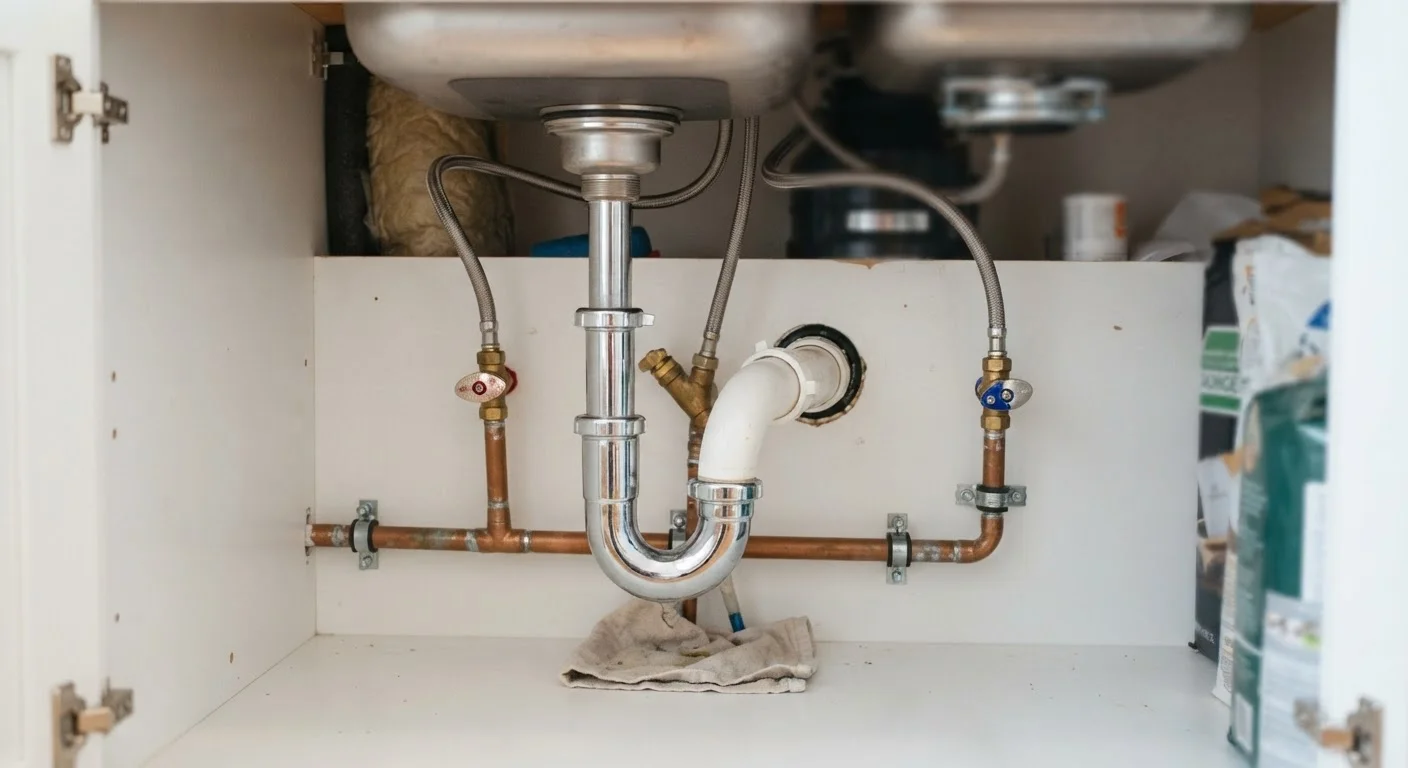
Photo: AskSpecialist.net editorial
Key Takeaways
- Every homeowner should locate and test both the main shutoff valve and fixture-level shutoffs before an emergency strikes.
- Slow leaks often go undetected for months, causing mold and structural damage that dwarfs the original repair cost.
- Flushing wipes, grease, and certain medications can trigger costly drain blockages or municipal fines.
- Simple quarterly checks - reading your meter, inspecting under sinks, testing toilet flappers - catch most problems early.
- Leaks near electrical panels, sewage backups, and burst pipes always require a licensed plumber, not a DIY fix.
Know Where Your Shutoffs Are
The single most important piece of plumbing knowledge for any homeowner is knowing how to stop the water - fast. In a burst-pipe scenario, every minute of delay adds to water damage. There are two levels of shutoff you need to locate.
Main shutoff valve: This controls water flow to the entire house. In most American homes it sits near where the supply line enters the foundation - often in a basement, utility room, or crawl space. In warmer climates, it may be outside near the meter box. Turn it clockwise (right) to shut water off.
Fixture-level shutoffs: Every toilet, sink, and appliance typically has its own small shutoff valve on the supply line directly behind or beneath it. These let you isolate a single fixture without cutting water to the whole house.
Once you've located each valve, test them. Valves that haven't been turned in years can seize up, which is the last thing you want during an emergency. If a valve is stuck or crumbling, have a licensed plumber replace it before you need it. For a broader look at how your home's systems connect, see The Anatomy of a Home.
Main shutoff valve
A single valve that stops all water flow into a home from the municipal supply or well. Closing it cuts water to every fixture and appliance in the house.
Fixture shutoff valve
A small valve on the supply line directly serving one fixture, such as a toilet or sink, allowing you to shut off only that fixture without affecting the rest of the house.
P-trap
The curved pipe section beneath a sink drain that holds a small amount of water to block sewer gases from entering the home. It's also a common spot where small objects get caught.
Water pressure regulator
A valve, usually near the main shutoff, that reduces incoming municipal water pressure to a safe level for household pipes and appliances.
Wax ring
A soft, ring-shaped seal between the base of a toilet and the drain flange in the floor. A failed wax ring causes water to seep out at the toilet base with each flush.
Anode rod
A metal rod inside a water heater tank that attracts corrosive minerals to protect the tank lining. It depletes over time and should be checked periodically.
How to Spot a Slow Leak Before It Becomes a Flood
Slow leaks are responsible for a significant share of home water damage - partly because they're easy to miss for months. Here's how to catch them early.
- Read your water meter: Record the reading, shut off all water use in the house for two hours, then check again. Any movement signals a leak somewhere in the system.
- Check under sinks regularly: Look at the cabinet floor and around supply-line connections for water stains, soft spots, or corrosion on fittings.
- Inspect toilet bases: Press the floor around the base of each toilet. Sponginess or discoloration can indicate a failed wax ring seal.
- Watch your water bill: A sudden increase in usage with no lifestyle change is a reliable early warning sign.
- Look up, not just down: Stained or bubbling ceiling paint below a bathroom is a strong indicator of a supply or drain leak above.
Label Your Shutoffs Now
Your water heater is another common leak source - check the area around its base and the pressure relief valve periodically.
What Not to Flush or Pour Down the Drain
Drain blockages are largely preventable. Most result from flushing or pouring things that pipes and municipal sewer systems were never designed to handle.
In the toilet, never flush:
- Wipes of any kind, including those labeled "flushable"
- Paper towels or tissues
- Cotton balls, swabs, or dental floss
- Medications (these affect water treatment systems - use a pharmacy take-back program instead)
- Cat litter
In the kitchen sink, avoid:
- Grease, oils, and fats (they solidify in pipes)
- Coffee grounds
- Pasta, rice, and starchy foods that expand with moisture
- Fibrous vegetables like celery or onion skins, even with a garbage disposal
Many of these materials don't cause immediate clogs - they accumulate gradually, narrowing your drain line over months until flow slows to a trickle or stops entirely. This is an area where common maintenance myths (like assuming a slow drain is fine as long as it drains at all) can quietly lead to expensive repairs.
Routine Checks Every Homeowner Should Do
Plumbing problems that are caught in the early stages almost always cost less - in both money and disruption - than those discovered after damage has set in. Build these into your home maintenance rhythm:
- Quarterly: Check under all sinks and around toilets for moisture; test that fixture shutoff valves turn freely.
- Seasonally: Inspect exposed pipes in garages or crawl spaces before cold weather arrives. Uninsulated pipes in unconditioned spaces are at risk of freezing when temperatures drop well below freezing.
- Annually: Have your water heater inspected and the anode rod checked. Clear slow drains before they become blocked ones.
- After any storm or hard freeze: Walk the perimeter of your foundation and check exposed supply lines for cracks or bulges.
These aren't complex tasks - they take minutes and require no tools beyond a flashlight and attentive eyes. For guidance on which of these tasks are genuinely DIY-safe versus which carry real risk, see DIY Maintenance vs. Calling a Professional.
When to Call a Licensed Plumber
Knowing your limits is as important as knowing your pipes. Some situations are genuinely dangerous or require specialized tools, permits, and expertise that go beyond homeowner territory.
Call a licensed plumber for:
- Any burst or actively leaking pipe you cannot isolate with a shutoff valve
- Sewage backup or odor from floor drains - this can indicate a main sewer line problem
- Water near your electrical panel or any wiring
- Consistent low water pressure throughout the house (may signal a failing pressure regulator or corroded supply lines)
- Any work that requires opening walls, soldering copper, or connecting to the main supply or sewer line
- Gas water heater installation or repair
Don't DIY Near Electrical or Gas Lines
Many plumbing projects also require permits, especially in older homes or when work touches the main supply or drain stack. Your local municipality can confirm what's required in your jurisdiction - don't assume a job is permit-free just because it's inside your own home. For new homeowners tackling larger projects, Home Renovation for First-Timers covers the permit process in accessible terms.
Frequently Asked Questions
The content on this site is provided for informational purposes only and should not be considered a substitute for professional advice. While we strive to provide accurate and up-to-date information, we make no guarantees regarding its completeness or accuracy. Always consult a qualified professional for advice specific to your circumstances before making any decisions.