
Drip Irrigation in the Home Garden: A Balanced Look

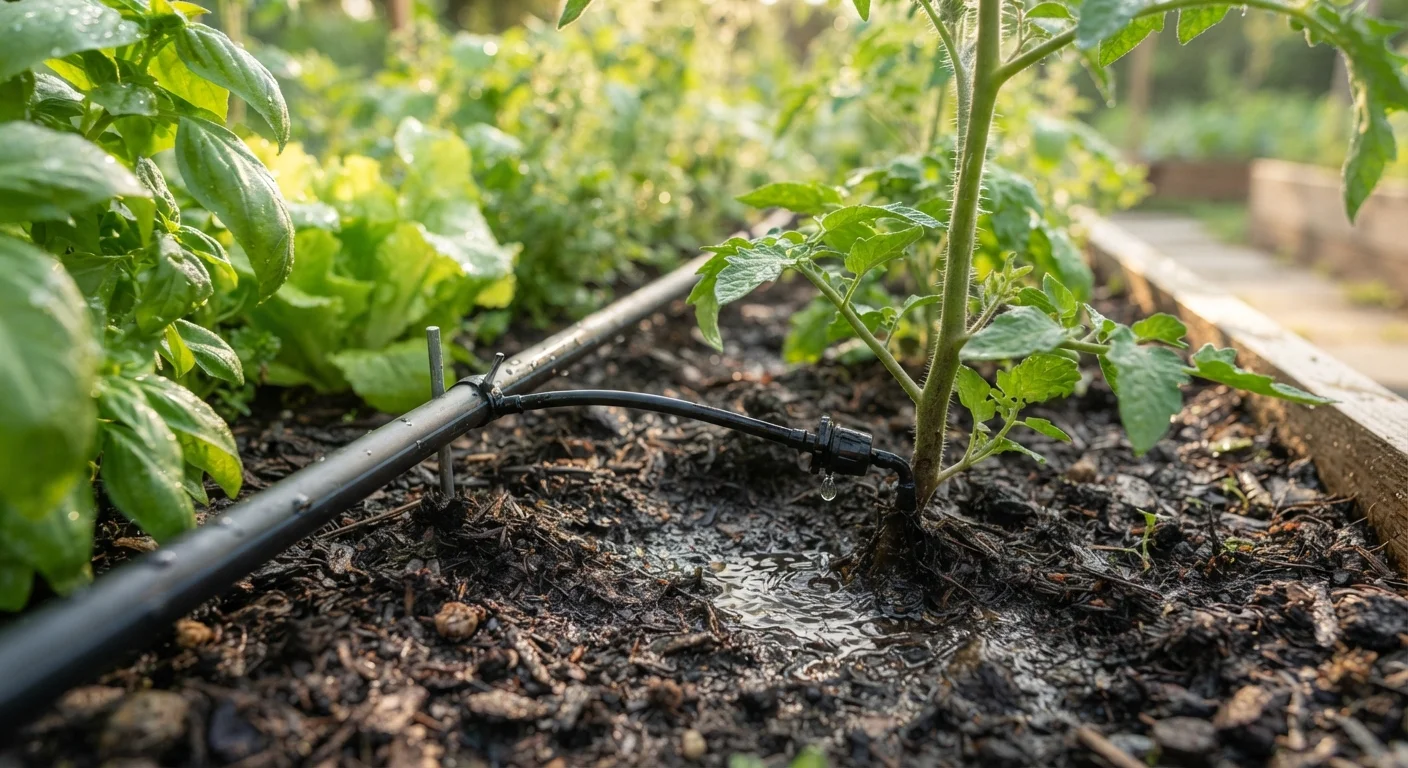
Photo: AskSpecialist.net editorial
Key Takeaways
- Drip irrigation can significantly reduce outdoor water use compared to sprinkler systems.
- Setup costs and time investment are real considerations before committing to a system.
- Clogged emitters are the most common maintenance issue and require regular inspection.
- Drip systems work especially well for raised beds, vegetable gardens, and established shrubs.
- A well-designed system can reduce fungal disease by keeping foliage dry.
Reduces water use compared to sprinklers
By delivering water directly to the root zone at low flow rates, drip systems minimize evaporation and runoff. Studies from university extension programs suggest drip irrigation can use 30-50% less water than conventional overhead watering in comparable garden settings.
Keeps foliage dry, reducing fungal disease
Since water never contacts leaves or stems, conditions that favor fungal infections - moisture on plant surfaces - are largely avoided. This is a meaningful benefit in humid climates where diseases like powdery mildew are chronic problems.
Saves time once installed
Paired with a basic timer, a drip system can water your garden automatically without daily attention. This is especially useful during vacations or stretches of hot weather when hand-watering would otherwise be required twice a day.
Suppresses weed growth between plants
Because water is delivered only at the root zone of intended plants, surrounding soil stays drier, which discourages weed germination in the spaces between rows or plants.
Adaptable to most garden layouts
Drip systems can be configured for raised beds, in-ground rows, container gardens, and shrub borders. Modular components make it possible to expand or reconfigure as your garden evolves.
Higher upfront cost than a garden hose
A basic drip kit for a small garden can cost anywhere from $30 to over $150, and more complex installations with timers and multiple zones add to that. The investment typically pays back over time through water savings, but the initial outlay is real.
Emitters clog and require regular inspection
Mineral buildup, algae, and debris can block emitter openings, starving plants of water without obvious signs until damage appears. Checking emitters at the start of each season - and periodically during - is necessary maintenance.
Initial setup is time-consuming
Planning emitter placement, cutting tubing to length, and securing lines correctly takes a few hours of focused effort. Gardens with irregular layouts or many plant varieties require especially careful design before installation.
Less effective in sandy or compacted soils
In sandy soils, water moves straight down rather than spreading outward, which can leave portions of the root zone dry. In heavily compacted soil, water may pool at the surface rather than penetrating. Soil preparation and emitter spacing both need to account for soil type.
Tubing can be damaged by digging or pests
Rodents occasionally chew through drip lines, and ordinary garden digging can puncture or displace tubing. Damage may go unnoticed for days, leading to dry patches in the garden.
What Drip Irrigation Actually Is
Drip irrigation is a low-pressure watering method that delivers water slowly and directly to the root zone of plants through a network of tubing and small emitters. Unlike sprinklers, which broadcast water over a wide area, drip systems target individual plants - minimizing runoff, evaporation, and wet foliage.
Home garden drip systems typically include a main supply line, smaller distribution tubing, emitters (which release water at a measured rate), and often a timer or pressure regulator. They can be connected to a standard outdoor spigot and adapted to fit nearly any garden layout, from raised beds to in-ground rows. If you're already building out a raised bed garden, drip irrigation integrates particularly well from the start.
The Advantages of Drip Irrigation
For many home gardeners, the benefits of drip irrigation are substantial - and they go beyond just convenience.
Reduces water use compared to sprinklers
By delivering water directly to the root zone at low flow rates, drip systems minimize evaporation and runoff. Studies from university extension programs suggest drip irrigation can use 30-50% less water than conventional overhead watering in comparable garden settings.
Keeps foliage dry, reducing fungal disease
Since water never contacts leaves or stems, conditions that favor fungal infections - moisture on plant surfaces - are largely avoided. This is a meaningful benefit in humid climates where diseases like powdery mildew are chronic problems.
Saves time once installed
Paired with a basic timer, a drip system can water your garden automatically without daily attention. This is especially useful during vacations or stretches of hot weather when hand-watering would otherwise be required twice a day.
Suppresses weed growth between plants
Because water is delivered only at the root zone of intended plants, surrounding soil stays drier, which discourages weed germination in the spaces between rows or plants.
Adaptable to most garden layouts
Drip systems can be configured for raised beds, in-ground rows, container gardens, and shrub borders. Modular components make it possible to expand or reconfigure as your garden evolves.
30-50%
Water savings vs. overhead irrigation
University cooperative extension programs commonly cite this range when comparing drip irrigation to sprinkler or overhead watering in garden settings.
90%+
Estimated irrigation efficiency of drip systems
The USDA and various water conservation agencies note that drip irrigation can achieve application efficiencies above 90%, compared to roughly 65-75% for sprinkler systems.
Because water goes directly to the root zone, foliage stays dry. This matters because wet leaves are a primary vector for fungal diseases like powdery mildew and early blight - problems that sprinkler-irrigated gardens frequently struggle with. Drip systems also suppress weed growth in the spaces between plants, since those areas receive little to no moisture.
Gardeners who incorporate drip systems into a broader home maintenance routine often find that watering becomes one less task to think about during busy weeks.
The Disadvantages Worth Knowing
Drip irrigation isn't without its drawbacks, and going in with clear expectations will save frustration later.
Higher upfront cost than a garden hose
A basic drip kit for a small garden can cost anywhere from $30 to over $150, and more complex installations with timers and multiple zones add to that. The investment typically pays back over time through water savings, but the initial outlay is real.
Emitters clog and require regular inspection
Mineral buildup, algae, and debris can block emitter openings, starving plants of water without obvious signs until damage appears. Checking emitters at the start of each season - and periodically during - is necessary maintenance.
Initial setup is time-consuming
Planning emitter placement, cutting tubing to length, and securing lines correctly takes a few hours of focused effort. Gardens with irregular layouts or many plant varieties require especially careful design before installation.
Less effective in sandy or compacted soils
In sandy soils, water moves straight down rather than spreading outward, which can leave portions of the root zone dry. In heavily compacted soil, water may pool at the surface rather than penetrating. Soil preparation and emitter spacing both need to account for soil type.
Tubing can be damaged by digging or pests
Rodents occasionally chew through drip lines, and ordinary garden digging can puncture or displace tubing. Damage may go unnoticed for days, leading to dry patches in the garden.
The most common complaint among home gardeners is clogged emitters. Mineral deposits, algae, and debris can block the small openings over time, causing some plants to be underwatered while others appear fine. Regular inspection - especially early in the growing season - is essential. Understanding when a problem is DIY-fixable versus when to call for help is a useful skill; see our guide on DIY maintenance vs. calling a professional for a broader framework.
Drip systems can also be less effective in sandy soils, where water moves straight down rather than spreading laterally to fill the root zone. In these cases, emitter placement and spacing require extra planning.
Soil Type Affects System Performance
Is Drip Irrigation Right for Your Garden?
The honest answer is: it depends on your garden's structure and your willingness to maintain the system. Drip irrigation rewards gardeners with organized, defined planting areas - rows of vegetables, raised beds, or established shrub borders - where emitters can be placed once and left in position season after season.
It's less practical for cottage-style gardens with constantly shifting plant arrangements, or for lawns, which require the broad coverage that sprinklers provide. Container gardens can benefit from drip setups, but the system needs to be tailored carefully to avoid over- or under-watering individual pots.
Starting small - one raised bed or one garden row - is a reasonable way to test whether the system suits your habits before investing in a whole-yard installation. For more on maintaining your garden and home systems together, explore the Home Maintenance hub for practical upkeep guidance.
The content on this site is provided for informational purposes only and should not be considered a substitute for professional advice. While we strive to provide accurate and up-to-date information, we make no guarantees regarding its completeness or accuracy. Always consult a qualified professional for advice specific to your circumstances before making any decisions.