
Soil pH and Why It Quietly Controls Everything in Your Garden

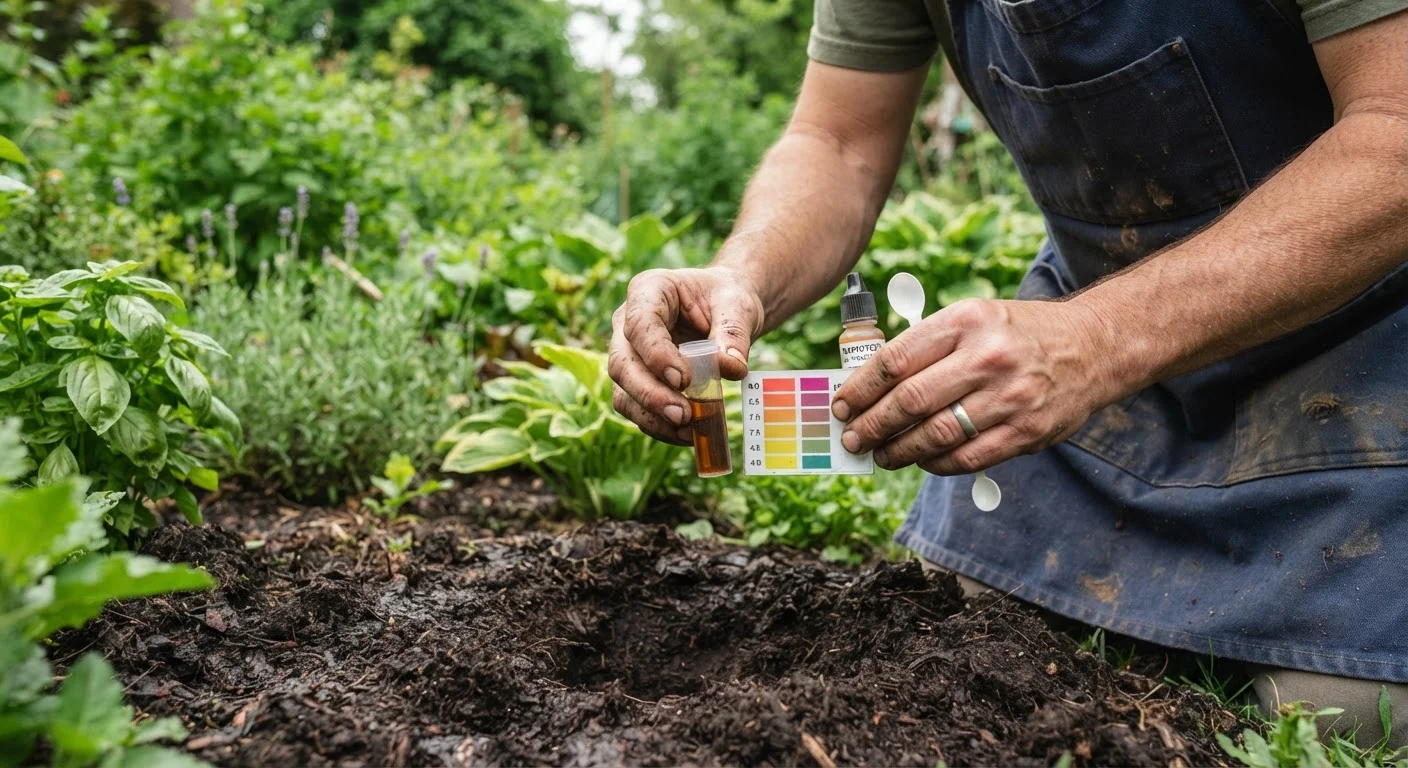
Photo: AskSpecialist.net editorial
Key Takeaways
- Soil pH controls nutrient availability, meaning the wrong pH can starve plants even in fertilized soil.
- Most vegetables and lawn grasses prefer a slightly acidic pH between 6.0 and 7.0.
- Inexpensive home test kits and cooperative extension lab tests can reveal your soil's pH quickly.
- Ground limestone raises pH in acidic soil; elemental sulfur lowers pH in alkaline soil.
- pH adjustments take time - plan weeks or months ahead rather than expecting overnight results.
- Compost and organic matter help buffer soil pH naturally over time.
What Soil pH Actually Means
Think of the pH scale as a sliding dial that governs chemistry in your soil. At one end you have strongly acidic soil - like the peaty bogs where blueberries and azaleas naturally grow. At the other end sits highly alkaline soil, common in arid western regions where calcium and magnesium minerals accumulate. Most American backyards land somewhere in the middle, but small differences matter enormously to plants.
The reason pH has such outsized influence is that it controls the solubility of nutrients. Nutrients like iron, manganese, phosphorus, and calcium only dissolve into soil water - where roots can actually absorb them - within specific pH windows. Outside those windows, the nutrients lock up into compounds roots cannot access. You can add fertilizer all season and still see yellow, struggling plants if pH is off. The nutrients are there; the plant simply cannot reach them.
Regional Soil pH Tendencies
How to Test Your Soil pH
Testing is the essential first step - gardening without knowing your pH is guesswork. You have two practical options:
- Home test kits: Color-indicator strips or liquid drop tests give a ballpark reading in minutes. They're useful for spotting a serious imbalance but aren't precise enough for fine-tuned adjustments.
- Cooperative extension lab tests: Your local university extension service can analyze a soil sample and return a detailed report including pH, organic matter, and nutrient levels - often for a modest fee. This is the gold standard for serious gardeners and provides amendment recommendations tailored to your specific soil.
When collecting a sample, take small scoops from several spots in the area you want to test, mix them together, and submit that composite. A single scoop from one corner rarely represents the whole bed. See our guide to raised bed gardening for advice on managing soil quality in contained growing spaces.
Adjusting pH: Raising and Lowering It
Once you know your pH, adjustment is straightforward - though patience is required.
Raising pH (Making Soil Less Acidic)
Ground limestone, also called agricultural lime, is the go-to amendment. It neutralizes acidity by introducing calcium carbonate into the soil. Work it in thoroughly and allow at least four to six weeks before retesting. Dolomitic lime also supplies magnesium, which benefits many soils. The quantity you need depends on your starting pH, target pH, and soil texture - clay soils require more amendment than sandy ones to shift the same amount.
Lowering pH (Making Soil Less Alkaline)
Elemental sulfur is the most reliable acidifier. Soil bacteria convert it to sulfuric acid slowly, so results appear over one to three months. Aluminum sulfate acts faster but can accumulate to toxic levels if overused - apply carefully and always follow soil test recommendations. Adding organic matter such as compost or acidic mulches like pine bark also nudges pH downward gradually. See our breakdown of mulch, compost, and topsoil for how each material affects your soil differently.
Test Before You Amend
pH Preferences Vary by Plant
Not every plant wants the same conditions. Here's a practical snapshot of common pH preferences:
| Plant Type | Preferred pH Range |
|---|---|
| Most vegetables | 6.0-7.0 |
| Lawn grasses (cool-season) | 6.0-7.0 |
| Blueberries | 4.5-5.5 |
| Azaleas & rhododendrons | 4.5-6.0 |
| Lavender & sage | 6.5-7.5 |
| Hydrangeas | 5.5-6.5 (affects bloom color) |
Understanding plant-specific needs helps you group plants with similar pH requirements together in the same bed - simplifying maintenance considerably. If you're planning a shaded corner of your yard, check the pH preferences of your shade-tolerant choices early. Our article on plants that thrive in shade covers many species that have defined pH preferences worth knowing.
6.0-7.0
Optimal pH range for most garden plants
This range is widely cited by university extension programs across the U.S. as the window where the broadest set of nutrients remain plant-available.
4.5-5.5
pH preferred by blueberries
Blueberries are among the most pH-sensitive common garden crops; planting them in neutral soil typically results in poor fruiting and leaf chlorosis.
3-6 months
Typical time for sulfur to lower pH
The National Gardening Association notes that elemental sulfur requires microbial activity to convert it to acid, a process that unfolds slowly depending on soil temperature and moisture.
Frequently Asked Questions
The content on this site is provided for informational purposes only and should not be considered a substitute for professional advice. While we strive to provide accurate and up-to-date information, we make no guarantees regarding its completeness or accuracy. Always consult a qualified professional for advice specific to your circumstances before making any decisions.