
Mulch, Compost, and Topsoil: What Each One Actually Does for Your Yard

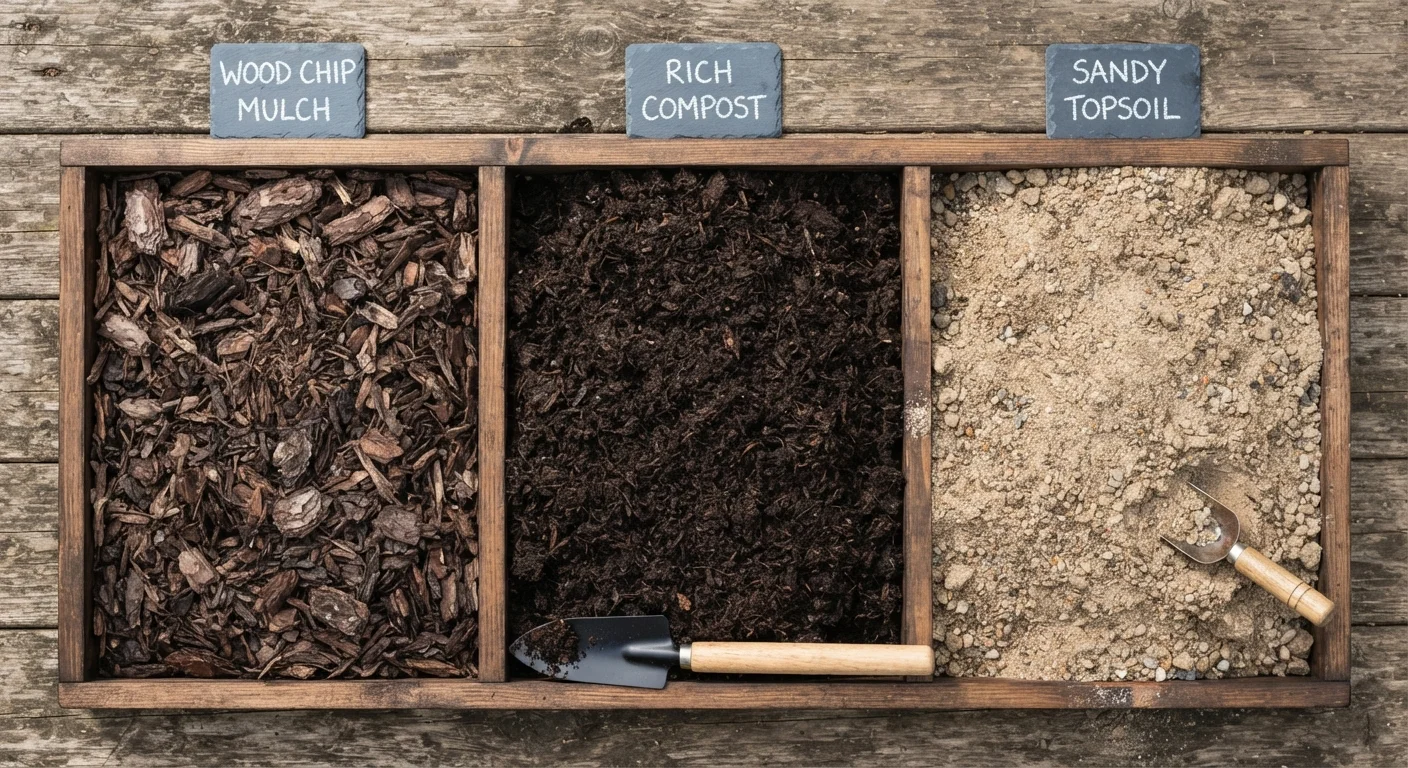
Photo: AskSpecialist.net editorial
Why These Three Get Confused
Walk into any garden center and you'll find bags of mulch, compost, and topsoil stacked near one another, often without much explanation. All three are dark, earthy materials that go somewhere in your yard - and that's roughly where the similarities end. Each one does a fundamentally different job, and using the wrong one for the wrong task can mean wasted money and disappointing results.
Think of it this way: topsoil is the foundation, compost is the food, and mulch is the protective cover. Those three roles rarely overlap, even though all three can improve your yard when applied correctly. Understanding the distinction makes you a more confident gardener and a smarter shopper at the nursery.
Topsoil: The Foundation Layer
Topsoil is exactly what it sounds like - the uppermost layer of native soil, typically the top 2 to 8 inches of earth. It contains mineral particles, organic matter, water, air, and living microorganisms. In healthy ground, it's the layer where most plant roots grow and where biological activity is highest.
Bagged or bulk topsoil is used primarily to raise grade, fill low spots, or establish a planting base where the original soil has been stripped away - common after construction projects or major landscaping changes. It is not a soil amendment in the traditional sense; it replaces or supplements what isn't there.
Quality varies widely. Look for topsoil that is screened (meaning large debris has been removed) and that smells earthy rather than sour or musty. On its own, topsoil may lack the nutrient richness needed for vigorous plant growth, which is why it's often mixed with compost when building new planting beds. For raised bed gardening, topsoil is typically blended with other amendments - see our guide to raised bed gardening for more on soil mixes.
Compost: The Soil Amendment That Feeds
Compost is decomposed organic matter - yard trimmings, food scraps, leaves, and similar materials broken down by microbes into a dark, crumbly material often called humus. It is not a standalone growing medium; it is a soil amendment worked into existing soil to improve its structure and fertility.
What compost actually does is remarkable. It loosens dense clay soils, helps sandy soils retain moisture, introduces beneficial microorganisms, and slowly releases nutrients as it continues to break down. Unlike synthetic fertilizers, compost feeds soil life, not just the plant. For a deeper look at how organic feeding compares to synthetic alternatives, see our article on organic vs. synthetic fertilizer trade-offs.
Apply compost by working 2-3 inches into the top 6-8 inches of soil before planting, or spread a half-inch layer as a top-dressing around established plants each season. Making your own is easier than many homeowners expect - our guide to home composting walks through the process step by step.
Topsoil
The uppermost 2-8 inches of earth containing mineral particles, organic matter, and microorganisms. It is used to fill, level, or establish a planting base rather than as a soil amendment.
Compost
Decomposed organic matter (leaves, food scraps, yard waste) broken down by microbes into a nutrient-rich, crumbly material. It is worked into soil to improve fertility, structure, and biological activity.
Mulch
Material spread on the soil surface - not mixed in - to suppress weeds, retain moisture, and regulate soil temperature. Organic mulches also slowly decompose and contribute minor amounts of organic matter.
Soil Amendment
Any material added to existing soil to improve its physical or chemical properties. Compost is a common organic amendment; others include perlite, peat moss, and lime.
Humus
The stable, dark organic component of soil that results from the full decomposition of plant and animal matter. Finished compost is rich in humus and is one of the primary ways gardeners add it to soil.
Mulch: The Protective Surface Layer
Mulch is material - organic or inorganic - spread on top of the soil surface. It is not mixed in; it stays on top. Its primary jobs are to suppress weeds, moderate soil temperature, and slow moisture evaporation. Organic mulches (wood chips, shredded bark, straw, pine needles) also gradually decompose and add some organic matter to the soil over time, though that's a secondary benefit rather than their main purpose.
A standard mulch layer is 2-4 inches deep. Too thin and it won't suppress weeds effectively; too thick and it can suffocate roots and harbor pests. One common mistake is piling mulch directly against tree trunks - the so-called "mulch volcano" - which traps moisture against the bark and can cause rot and disease. Keep mulch several inches away from any trunk or stem.
Inorganic mulches like gravel or landscape fabric serve a similar weed-suppression role but contribute nothing to soil health. Organic mulches are generally preferred for planting beds. For a full seasonal view of when to apply and refresh mulch, our seasonal lawn care reference offers a helpful schedule.
Choosing the Right Material for the Job
The simplest decision framework: ask what problem you're solving.
- Low or bare spots in the yard? Use topsoil to fill and level.
- Poor, compacted, or nutrient-depleted soil? Work compost into the bed before planting.
- Weeds, dry soil, or temperature swings around plants? Apply mulch on the surface.
These materials are also frequently used together. A new planting bed might call for topsoil to build the base, compost worked in to enrich it, and mulch spread on top to protect the surface after planting - three distinct layers, three distinct functions. Understanding your soil's current condition helps guide the decision. If you suspect nutrient or pH imbalances, our article on soil pH and plant health is a practical next step.
None of these materials is universally "better" - they answer different questions. The homeowner who reaches for compost when they need grade correction, or spreads topsoil hoping to suppress weeds, will be disappointed. Match the material to the task and you'll get reliable, consistent results.
The content on this site is provided for informational purposes only and should not be considered a substitute for professional advice. While we strive to provide accurate and up-to-date information, we make no guarantees regarding its completeness or accuracy. Always consult a qualified professional for advice specific to your circumstances before making any decisions.