
The Anatomy of a Retail Discount: How Markdowns Are Calculated

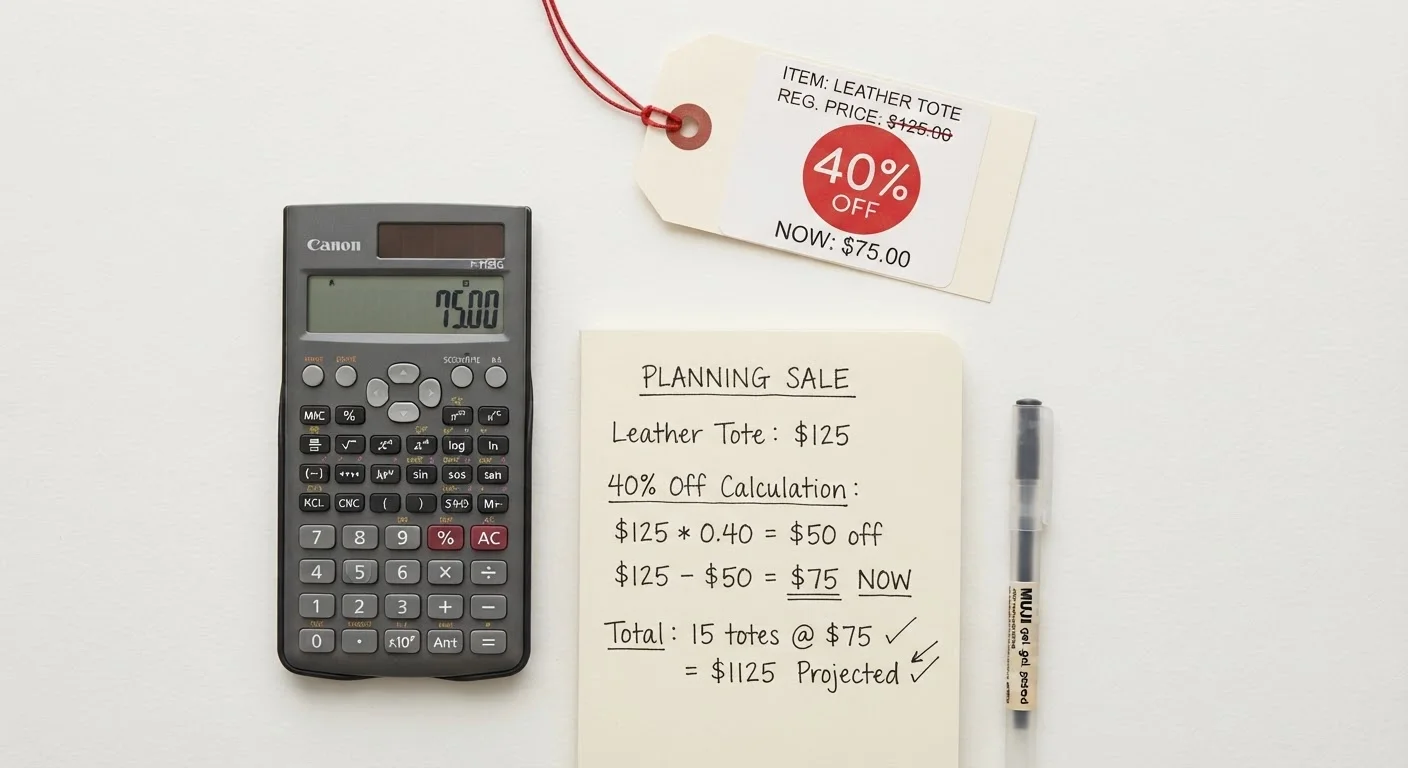
Photo: AskSpecialist.net editorial
Key Takeaways
- The 'original price' used to calculate a discount is set by the retailer - it may never have been the regular selling price.
- Percentage-off figures are only meaningful when compared to what the item actually sells for most of the time.
- Inflated reference prices are a documented retail practice, sometimes called 'high-low pricing.'
- Price history tools can help verify whether a claimed original price reflects real market history.
- Not all discount types work the same way - knowing the math behind each helps you evaluate actual savings.
Where the 'Original Price' Actually Comes From
Every markdown starts with a reference price - the number displayed as the original, from which the percentage off is calculated. What most shoppers don't realize is that this number is set by the retailer, not by an independent authority, and it may have little connection to what the product routinely sold for.
There are several common sources retailers use for reference prices:
- MSRP (Manufacturer's Suggested Retail Price): A price the manufacturer recommends, which is frequently higher than typical street prices. Discounting from MSRP can make savings look larger than they are in practice.
- Briefly held prices: A retailer might list an item at a high price for a short window - sometimes just long enough to legally justify calling it the 'original price' - before marking it down.
- Internal list prices: Some retailers maintain internal price points never intended to be the actual transaction price. These function primarily as anchors.
Understanding this is foundational. The percentage-off figure is mathematically correct relative to the stated original - the arithmetic isn't dishonest. But if the original was inflated or temporary, the claimed saving overstates your actual benefit. For a deeper look at how this psychological mechanism works, see how price anchoring shapes perceived value.
How Percentage-Off Math Works - and Where It Can Mislead
The formula for a percentage discount is straightforward: divide the markdown amount by the original price, then multiply by 100. A product listed at $100, sold for $70, yields a 30% discount. Simple enough.
The problem isn't the math - it's the inputs. Consider two scenarios:
- An item with a genuine market price of $100 goes on sale for $70. You save $30, or 30%.
- An item typically priced at $75 is first listed at $100 for two weeks, then 'discounted' to $70. The tag still reads 30% off - but you're saving only $5 from the real market norm.
This second scenario reflects what's commonly called high-low pricing - a documented retail strategy where elevated regular prices are set specifically to make promotional discounts appear more dramatic. It's legal in most cases, provided the original price was genuinely offered for a reasonable period, per Federal Trade Commission guidelines. But the consumer experience is that the deal feels bigger than it is.
~60%
Of major retailer promotions involve inflated reference prices
A research analysis cited by the Journal of Marketing Research found that a significant share of promotional 'regular prices' were not genuine former selling prices under standard interpretations.
87%
Of consumers believe sale prices represent real savings
Consumer behavior research has consistently found that shoppers largely take advertised 'original prices' at face value without independent verification.
13x
Higher perceived value lift from percentage-off vs. dollar-off framing
Studies in consumer psychology show that percentage-based discount framing produces stronger purchase intent than equivalent dollar savings, especially on higher-priced items.
To get a clearer picture of what a product actually sells for over time, price tracking tools can reveal historical price data that contextualizes any current promotion.
Types of Markdowns and What Each Actually Means
Not all discounts are structured the same way. Knowing the differences helps you evaluate what you're actually being offered:
- Clearance markdowns
- These are genuine inventory reductions - the retailer needs to move product and is accepting a lower margin. Clearance prices tend to reflect real urgency and are often the most straightforward discounts.
- Promotional discounts
- Time-limited events (holiday sales, annual events) that may or may not start from a fair reference price. These are the category most susceptible to inflated original pricing.
- Everyday low price (EDLP)
- A strategy where retailers commit to stable, competitive prices without frequent sales. There's no 'original price' to inflate - but comparison shopping is still warranted.
- Stacked discounts
- A percentage off applied to an already-discounted price, or a coupon added on top of a sale. The effective saving must be calculated from the final transaction price versus the true market price, not the stacked promotional figures.
For a fuller glossary of terms retailers use in promotions, retail marketing language decoded covers the common vocabulary worth knowing.
Use the Real Price as Your Baseline
Verifying Whether a Deal Is Real
A few practical approaches help cut through promotional noise:
- Check price history: Tools that log historical price data for online listings can show whether an item's 'original price' was ever a real transaction price or simply a high anchor.
- Compare across retailers: If the same product carries a different 'original price' at different stores, that signals the reference prices are constructed, not fixed.
- Note sale frequency: An item perpetually on sale suggests the sale price is the real price. Understanding seasonal markdown patterns helps you recognize which promotions are genuinely periodic versus always-on.
- Read the fine print: Promotional terms sometimes define what qualifies as the 'original price.' What retailers bury in their terms explains where to look and what to watch for.
The baseline discipline is simple: before evaluating a percentage off, ask what the item typically sells for - not what the retailer says it used to cost.
Frequently Asked Questions
The content on this site is provided for informational purposes only and should not be considered a substitute for professional advice. While we strive to provide accurate and up-to-date information, we make no guarantees regarding its completeness or accuracy. Always consult a qualified professional for advice specific to your circumstances before making any decisions.