
Carry-On Packing: What Most Travelers Get Wrong at Security

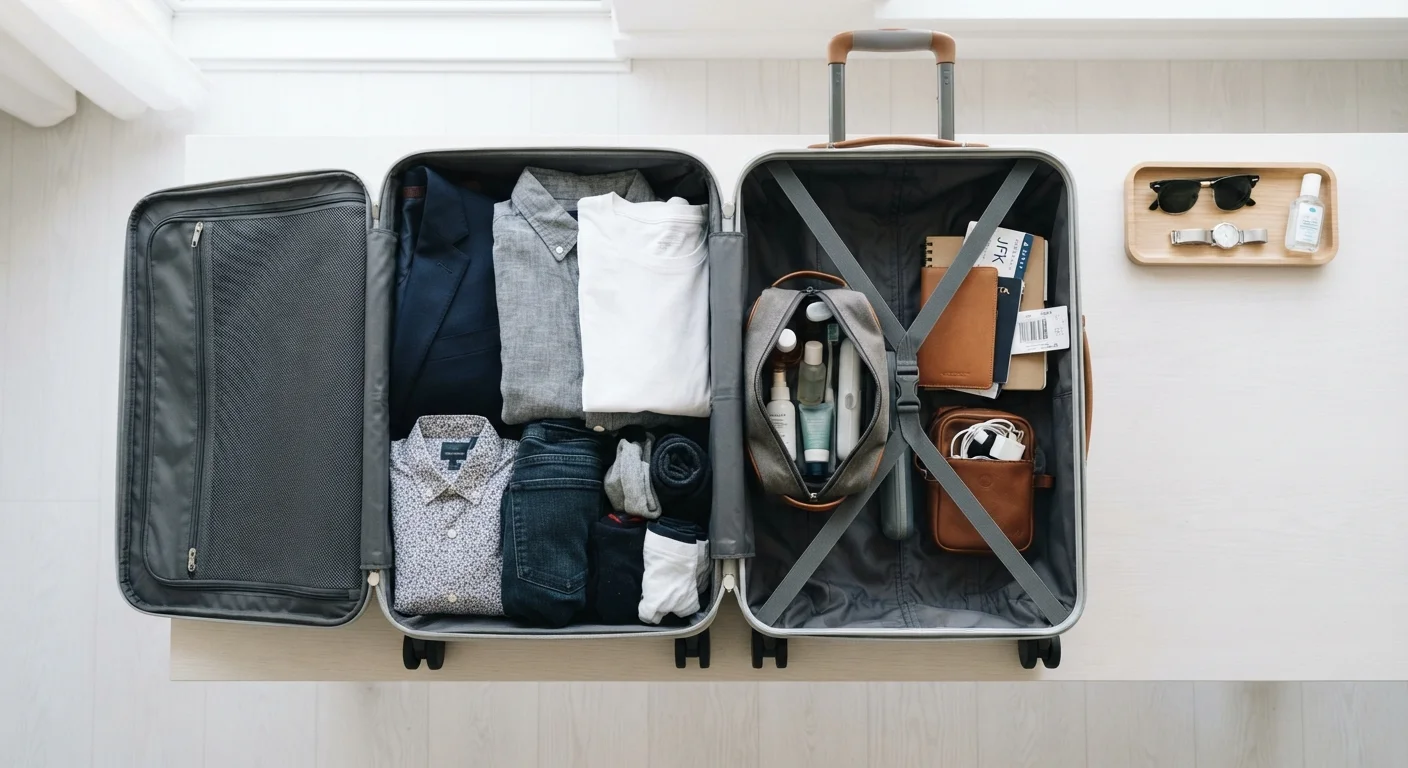
Photo: AskSpecialist.net editorial
Key Takeaways
- Liquids exceeding 3.4 oz or packed loosely in your bag are among the most common TSA delay triggers.
- Electronics larger than a cell phone must be removed from your bag and placed in a separate bin at standard checkpoints.
- Overpacking a carry-on past airline size limits can result in forced gate-checking and unexpected fees.
- Medications and medical devices have specific TSA rules that differ from general carry-on guidelines.
- Packing items in the wrong order - dense objects near the top - causes X-ray rescreens and slows the whole line.
Why Carry-On Mistakes Keep Happening
Security lines are high-pressure environments. Most travelers pack at home with the assumption that what worked last time will work again - but TSA rules, airline size policies, and checkpoint procedures shift more often than passengers realize. The result is a predictable cluster of errors that hold up not just individual travelers but everyone behind them in line.
Understanding why these mistakes happen is the first step toward avoiding them. Most come down to three root causes: outdated assumptions about what's allowed, poor bag organization that obscures contents during screening, and underestimating how strictly size and weight limits are enforced at the gate. See our pre-departure checklist for a broader look at what to verify before you leave home.
The Most Common Carry-On Packing Mistakes
The errors below account for a large share of TSA screening delays and gate-side bag disputes. Work through each one before your next flight.
Packing liquids that exceed 3.4 oz (100 ml) or failing to place them in a single quart-sized clear bag.
Leaving laptops and large electronics buried inside the bag at the checkpoint.
Choosing a bag that is borderline on size and hoping it won't be measured at the gate.
Forgetting that dense, irregularly shaped items packed near the top create X-ray ambiguity and slow rescreens.
Carrying prohibited or restricted items without realizing they're on the TSA's not-allowed list.
Assuming medications and medical devices follow the same rules as regular carry-on items.
Gate-Checking Isn't Always Free
Smarter Packing Habits That Hold Up at the Checkpoint
Once you understand what goes wrong, the fix is mostly a matter of building a consistent pre-travel routine. Start by laying everything out before it goes into the bag. Ask: does this liquid fit the 3-1-1 rule? Can I access my electronics in seconds? Is this bag truly within the airline's published carry-on dimensions - not just close?
~6M
Items stopped by TSA per year
TSA reported stopping millions of prohibited items at checkpoints annually, with liquids violations consistently among the leading categories.
3-1-1
TSA liquid rule travelers routinely misapply
The rule - 3.4 oz containers, 1 quart-sized bag, 1 bag per traveler - is frequently misunderstood, with many travelers unsure whether gels and aerosols are included (they are).
One habit that consistently helps: pack your quart-sized liquids bag and your electronics near the top of your carry-on or in an external pocket. When you reach the checkpoint, both come out quickly without disrupting the rest of your bag. This alone eliminates the two most common causes of rescreen requests.
Travelers carrying prescription medications should organize documentation before reaching the checkpoint. For a thorough overview of what to prepare, see our guide on traveling with medications. If you're heading abroad, keeping devices safe and charged internationally covers the added layer of adapter and voltage planning that domestic-focused packing guides often skip.
Finally, keep overall trip logistics in mind. A bag packed correctly for security can still become a problem if an unexpected layover forces a tight connection. Our piece on making the most of a layover addresses how to stay mobile and low-stress even when plans shift mid-journey.
The content on this site is provided for informational purposes only and should not be considered a substitute for professional advice. While we strive to provide accurate and up-to-date information, we make no guarantees regarding its completeness or accuracy. Always consult a qualified professional for advice specific to your circumstances before making any decisions.