
Lawn Care Through the Seasons: What to Do and When

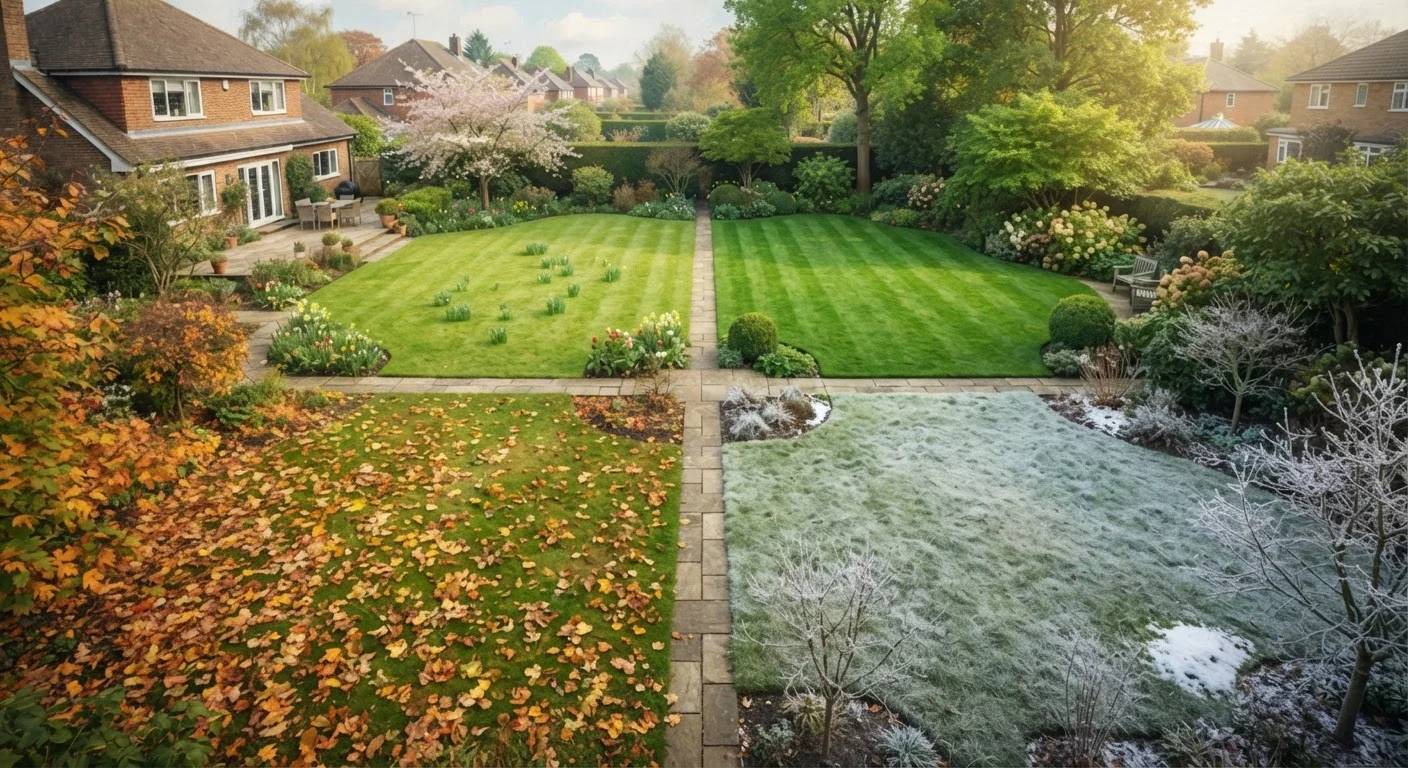
Photo: AskSpecialist.net editorial
Spring: Wake Up Your Lawn Right
Spring is the most critical window for setting your lawn up to succeed. As soil temperatures climb above 50°F, cool-season grasses like Kentucky bluegrass and tall fescue break dormancy, while warm-season varieties such as Bermuda and zoysia begin stirring later in the season.
Start with a soil test - a simple, inexpensive step that tells you exactly what nutrients your lawn needs before you add anything. Most cooperative extension offices offer low-cost testing kits. Based on results, apply a balanced or nitrogen-forward starter fertilizer once the lawn is actively growing, not while it's still dormant. For more on what fertilizer actually does - and what it doesn't - see common fertilizer myths debunked.
Spring is also the right time to dethatch if the thatch layer (the spongy mat of dead grass and roots) exceeds half an inch. Rake or use a dethatching machine early in the season. For a broader spring outdoor to-do list, a room-by-room spring yard checklist walks through every zone of your property.
- Mow height: Set blade to 3-4 inches for cool-season grass; never remove more than one-third of the blade at once.
- Weed control: Apply pre-emergent herbicide before soil temps hit 55°F to suppress crabgrass germination.
- Overseeding thin areas: Best done in early spring for warm-season grass, and fall for cool-season varieties.
Summer: Protect and Maintain
Summer heat stresses turf, especially in regions where temperatures regularly exceed 90°F. The goal shifts from growth to preservation. Water deeply and infrequently - about one inch per week, ideally applied in early morning to reduce evaporation and fungal risk. Shallow, frequent watering encourages shallow roots. See watering habits that harm lawns for a detailed breakdown of common irrigation mistakes.
Warm-Season vs. Cool-Season Timing Differs
Raise your mowing height by half an inch during heat peaks. Taller grass shades the soil, retains moisture, and faces less drought stress. Avoid fertilizing cool-season grasses during summer dormancy - pushing growth during heat causes more harm than good. Warm-season grasses, by contrast, are in their active growth phase and can be fertilized through midsummer.
- Mowing frequency: Mow when grass needs it, not on a fixed schedule - growth slows in extreme heat.
- Pest watch: Scout for grubs, chinch bugs, and sod webworms; treat only if population thresholds are reached.
- Irrigation audit: Check sprinkler heads for coverage gaps, clogs, or runoff onto hardscaping.
Fall: The Season That Pays Dividends
Fall is the single most productive season for cool-season lawn care. Cooler temperatures and reliable moisture create ideal conditions for root development. This is the best time to aerate - core aeration pulls small plugs of soil from the ground, relieving compaction and improving air, water, and nutrient movement to roots.
Core aeration
A mechanical process that removes small plugs of soil from a lawn to reduce compaction and improve the movement of air, water, and nutrients to grass roots.
Thatch
A dense layer of dead grass stems, roots, and debris that accumulates between the soil surface and the green grass blades. Excess thatch blocks water and nutrient absorption.
Pre-emergent herbicide
A weed control product applied to soil before weed seeds germinate. It prevents germination rather than killing existing weeds.
Winterizer fertilizer
A late-season fertilizer high in potassium that helps strengthen grass cell walls and root systems before winter dormancy.
Overseeding
The process of spreading grass seed over an existing lawn to fill thin or bare areas and improve overall turf density without tilling the soil.
Dormancy
A natural state of minimal growth and metabolic activity that grasses enter during extreme cold or drought. Dormant grass is not dead - it recovers when favorable conditions return.
Overseed immediately after aerating while the soil is open. Keep newly seeded areas consistently moist until germination. Apply a slow-release, phosphorus-rich fertilizer in early fall, then a winterizer fertilizer (higher potassium) in late fall to harden the grass ahead of cold. Topdressing with compost is an excellent complement; what mulch, compost, and topsoil each do explains how to use each material effectively.
- Aeration timing: Cool-season grasses - early to mid-fall; warm-season grasses - late spring to early summer.
- Leaf management: Mulch leaves with a mower rather than raking - shredded leaves decompose and feed the soil.
- Final mow: Gradually lower cutting height in the last two to three mows of the season.
Winter: Rest, Protect, and Plan
In most U.S. climates, winter is a rest period for the lawn. Cool-season grasses go semi-dormant; warm-season grasses turn brown and fully dormant. The main jobs are protection and preparation. Avoid walking on frozen turf - foot traffic on frost-brittle grass blades damages cell structure and creates dead patches come spring.
This is the right moment to service your mower, clean and sharpen blades, drain fuel from small engines, and store equipment properly. Seasonal upkeep applies to more than just the yard - just as you'd follow a year-round home maintenance calendar to stay ahead of wear, winter is a strategic planning window for the lawn too.
- Dormant lawns: Do not fertilize or apply herbicide to fully dormant grass.
- Irrigation winterization: Drain and blow out irrigation lines before the first hard freeze to prevent pipe damage.
- Planning: Order grass seed, soil amendments, and supplies early so you're ready when spring arrives.
Consistency across all four seasons - not heroic effort in one - is what produces a lawn that looks good and stays resilient. Pair your lawn schedule with a broader approach to outdoor care to get the most from your property all year.
The content on this site is provided for informational purposes only and should not be considered a substitute for professional advice. While we strive to provide accurate and up-to-date information, we make no guarantees regarding its completeness or accuracy. Always consult a qualified professional for advice specific to your circumstances before making any decisions.