
The Watering Habits That Are Slowly Killing Your Lawn

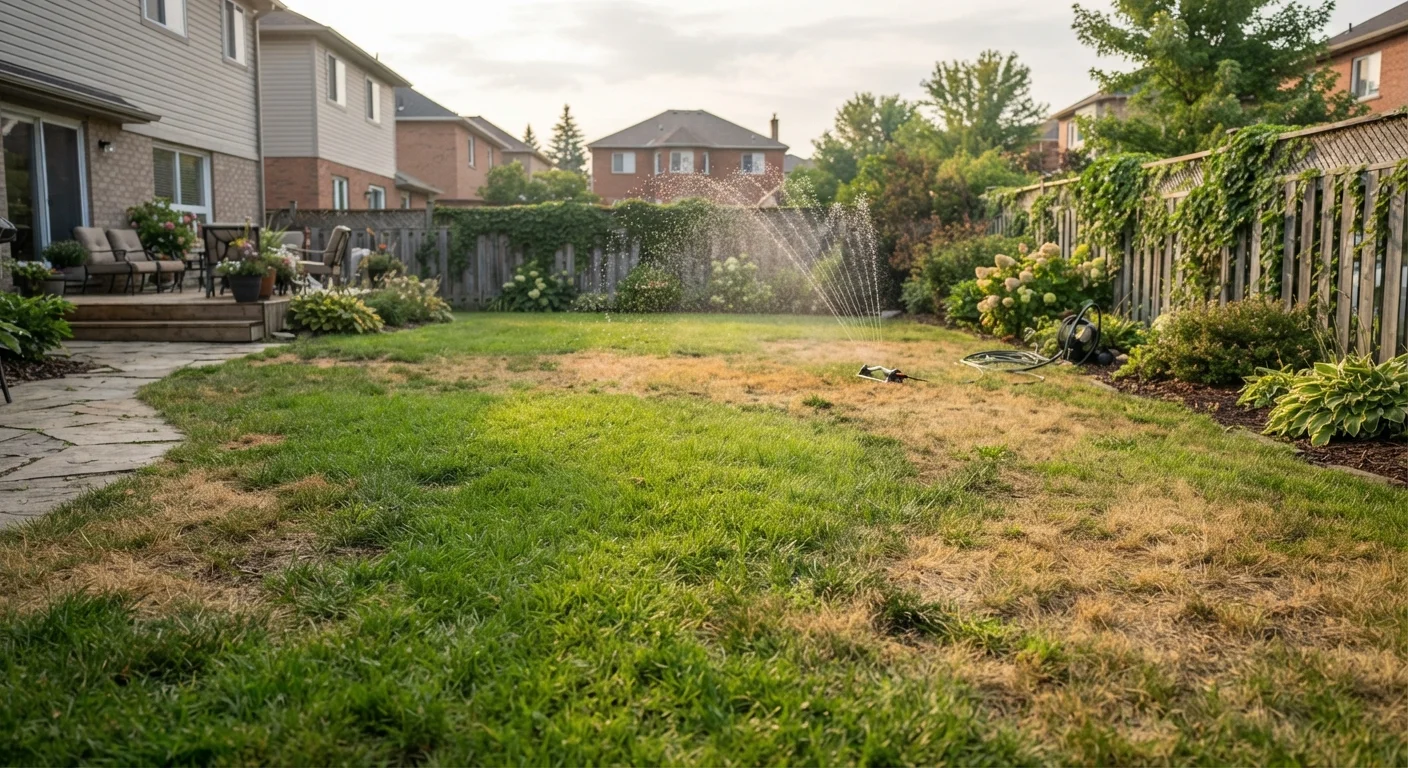
Photo: AskSpecialist.net editorial
Key Takeaways
- Watering too frequently but too shallowly trains grass roots to stay near the surface, making them drought-vulnerable.
- Early morning is the optimal time to water; evening watering promotes fungal disease.
- A simple screwdriver test can tell you whether your soil is getting enough water depth.
- Most established cool- and warm-season lawns need roughly one inch of water per week, including rainfall.
Why Watering Mistakes Are So Easy to Make
Lawn watering seems straightforward - turn on the sprinkler, let it run, and expect green grass. But water is one of the trickiest inputs to get right, because both too much and too little cause damage that looks almost identical: yellowing blades, thinning patches, and a lawn that never quite bounces back.
Most homeowners water based on habit or appearance rather than what the grass actually needs. Understanding a few core principles - how deep roots need to grow, how soil holds moisture, and how timing affects disease - can transform a struggling lawn into a resilient one. The seasonal lawn care guide is a useful companion for timing these habits correctly throughout the year.
Watering too frequently but too shallowly, delivering only a light daily sprinkle instead of a deep, thorough soak.
Watering in the evening, leaving grass blades wet through the night.
Running a fixed sprinkler schedule year-round without accounting for rainfall or seasonal changes.
Overwatering stressed or dormant grass during drought, expecting to revive it quickly.
Ignoring dry or wet patches caused by uneven sprinkler coverage.
Getting Watering Right: Practical Steps That Actually Work
Fixing your watering habits doesn't require expensive equipment or a complete overhaul. Small, deliberate changes to frequency, duration, and timing can have a noticeable impact within a few weeks.
~50%
Outdoor water use lost to inefficiency
The U.S. Environmental Protection Agency estimates that roughly half of outdoor residential water use is wasted due to evaporation, wind, and overwatering.
1 inch
Weekly water target for most lawns
University cooperative extension programs across the U.S. broadly recommend one inch of water per week - from irrigation and rainfall combined - as a baseline for most established turf grasses.
Test soil moisture before you water. Push a six-inch screwdriver into the ground. If it slides in easily, the soil has adequate moisture. If it resists or feels rock-hard, it's time to water. This simple test is more reliable than any timer or schedule.
Calibrate your sprinkler output. Set a few tuna cans or shallow containers across the lawn while the sprinkler runs. After 30 minutes, measure the water depth. Use that to calculate how long it takes your system to deliver one inch of water - then adjust run times accordingly.
Consider your soil type. Sandy soil drains quickly and may need slightly more frequent watering, while clay soil holds moisture longer but can become waterlogged. If you're unsure how your soil type is affecting water uptake, soil health basics can help you understand what's happening beneath the surface.
For gardeners interested in a more precise delivery method, drip irrigation is worth exploring - though it's better suited to garden beds than open turf areas. And remember, fertilizer myths can compound watering problems when grass is already stressed, so it's worth reviewing both together.
Don't Ignore Signs of Fungal Disease
The content on this site is provided for informational purposes only and should not be considered a substitute for professional advice. While we strive to provide accurate and up-to-date information, we make no guarantees regarding its completeness or accuracy. Always consult a qualified professional for advice specific to your circumstances before making any decisions.