
Attic Ventilation and Insulation: The Hidden Duo Behind Energy Efficiency and Roof Health

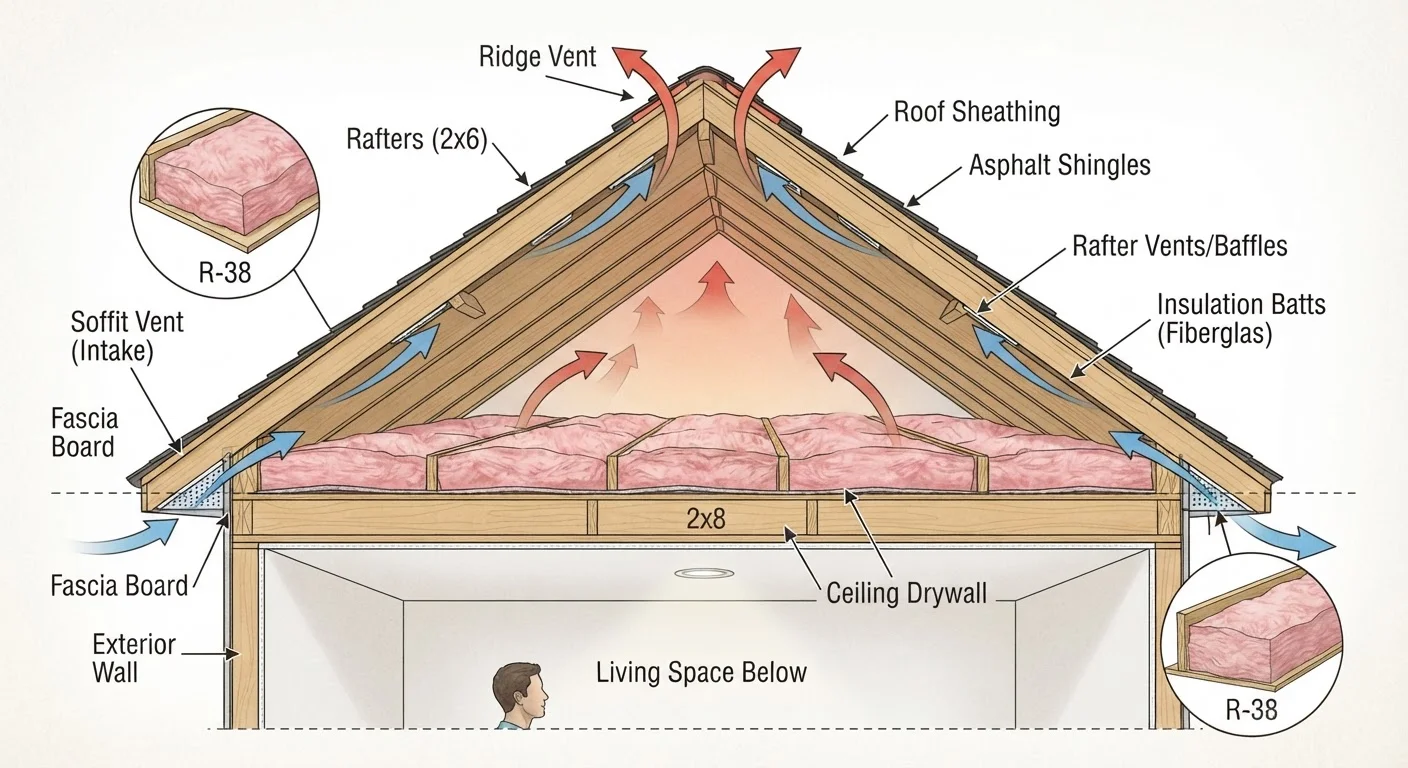
Photo: AskSpecialist.net editorial
Key Takeaways
- Attic ventilation and insulation work as a team - one without the other leaves your home vulnerable.
- Poor ventilation traps heat and moisture, which can rot roof sheathing and warp rafters over time.
- Inadequate insulation forces your HVAC system to work harder, driving up monthly energy bills.
- Ice dams in winter are a common sign that attic heat is escaping and melting snow unevenly.
- Most homeowners can assess their attic insulation depth themselves; ventilation issues may require a professional evaluation.
Why the Attic Is Central to Your Home's Performance
Most homeowners think of their attic as dead space - useful mainly for storage. In reality, it's one of the most functionally important areas in the house. The attic sits at the intersection of your roof, your living space, and the outdoor environment, making it a critical buffer zone that directly affects your comfort, energy costs, and roof longevity.
To understand why, consider what happens on a hot summer day. Solar radiation heats your roof surface, which in turn heats the air trapped in the attic. Without proper ventilation, that air can climb well above outdoor temperatures. That radiant heat then pushes down into your living space, forcing your air conditioner to work overtime. At the same time, inadequate insulation allows that heat to pass through your ceilings almost unimpeded.
For a broader picture of how your attic fits into your home's overall systems, see our guide to every major home system.
Up to 30%
Potential heating and cooling energy saved with proper attic insulation
According to the U.S. Department of Energy, adding insulation and sealing air leaks can reduce heating and cooling energy use by up to 30% in many homes.
1 in 6
U.S. homes estimated to have insufficient attic insulation
The North American Insulation Manufacturers Association has estimated that a significant portion of existing U.S. homes are under-insulated, leaving energy savings unrealized.
150°F+
Attic air temperature possible without adequate ventilation in summer
Building science research has documented that unventilated attics in hot climates can reach temperatures well above 140-150°F, accelerating shingle degradation.
How Attic Ventilation Actually Works
Attic ventilation relies on airflow - specifically, a balance between air entering the attic and air exiting it. The most effective systems use passive ventilation, which harnesses natural physics rather than mechanical fans.
Here's the basic principle: cool, denser air enters through soffit vents (located under the roof's eaves), travels upward as it warms, and exits through ridge vents or gable vents near the roof peak. This continuous circulation prevents hot air and moisture from sitting stagnant in the attic cavity.
When this system is blocked - by improperly placed insulation covering soffit vents, by too few vents, or by damaged vent covers - problems compound quickly:
- In summer: Attic temperatures spike, stressing roofing materials and driving up cooling loads.
- In winter: Warm air escaping from the living space condenses in the cold attic, creating moisture that can lead to mold, wood rot, and structural damage.
- Year-round: Trapped humidity shortens the lifespan of roof decking and insulation alike.
One telltale winter sign of poor ventilation: ice dams. These form when heat escaping from the attic melts snow on the roof, which then refreezes at the cold eaves. The resulting ice backup can force water under shingles and into your home. Our roof inspection basics guide covers the warning signs you can spot without climbing a ladder.
The Role of Insulation: Slowing Heat Transfer
While ventilation manages the air inside your attic, insulation manages heat movement between your attic and the rooms below. Insulation works by trapping pockets of air within its material, which slows thermal energy from passing through floors and ceilings.
Insulation is rated by R-value - a measure of resistance to heat flow. The higher the R-value, the more effective the insulation. The right R-value for your attic depends heavily on your climate zone. Homeowners in colder northern states typically need significantly higher R-values than those in mild southern climates.
Common attic insulation types include:
- Blown-in fiberglass or cellulose: Loose-fill material that conforms to irregular spaces and is often added over existing insulation to boost R-value.
- Fiberglass batts: Pre-cut panels typically installed between joists; familiar to most DIYers.
- Spray foam: Applied to the underside of the roof deck in unvented attic designs; seals and insulates simultaneously but requires professional installation.
One important note: insulation on the attic floor should never block soffit vents. Baffles (also called rafter vents) are installed between the insulation and the eave to maintain airflow. This is a common DIY mistake that undermines both systems at once.
If you're weighing a larger renovation, it's worth reviewing why skimping on insulation costs more long-term before making decisions.
Don't Insulate Before You Air-Seal
Moisture: The Silent Threat Linking Both Systems
Moisture is the underlying enemy that both ventilation and insulation defend against. Everyday household activities - cooking, showering, breathing - generate water vapor that rises and accumulates in the attic if there are air leaks in the ceiling below. Without ventilation moving that moisture out, it condenses on cold wood surfaces, creating ideal conditions for mold growth and wood decay.
Poor insulation makes this worse by allowing more warm, moist indoor air to enter the attic space. Together, the two failures create a feedback loop that can quietly damage your roof structure over years before a homeowner notices anything visible.
Signs of moisture problems in the attic include dark staining on rafters or sheathing, a musty odor, frost on interior surfaces in winter, or soft spots in the decking. If you find any of these, understanding moisture control in your home is an essential next read.
Sealing air leaks throughout the rest of your home also plays a role. Gaps around windows, doors, and penetrations allow conditioned air - and its moisture - to escape upward. Our guide on caulking and weatherstripping explains how those exterior seals work in concert with attic systems to reduce energy loss.
Practical Steps Homeowners Can Take
You don't need to be a contractor to assess your attic's basic condition. Here's where to start:
- Check insulation depth. Using a ruler, measure how deep your insulation sits on the attic floor. If it's less than 10-12 inches of blown-in material (or batts appear compressed), you may need more. Contact your local utility company - many offer free energy audits that include this assessment.
- Verify soffit vents are clear. Look at the eave area from inside the attic. You should see daylight through the vents and feel airflow on a breezy day. If they're blocked by insulation or debris, install baffles to restore the channel.
- Count and inspect your exhaust vents. Ridge vents, gable vents, or roof-mounted turbines should be present and unobstructed. Check for missing vent covers, bird nests, or damaged screens.
- Look for air leaks from below. Common culprits include recessed lighting fixtures, plumbing stacks, and the attic access hatch itself. These can be sealed with appropriate materials before adding insulation.
- Know when to call a pro. Any signs of structural damage, significant mold, or uncertainty about your ventilation design warrant a licensed contractor or home energy auditor. Ventilation calculations involve your specific roof geometry and local code requirements.
Maintaining your gutters is also part of this picture - blocked gutters can cause water to back up under eaves and contribute to soffit damage that restricts ventilation. Our article on why gutters matter more than most homeowners realize explains how that maintenance connects.
Frequently Asked Questions
The content on this site is provided for informational purposes only and should not be considered a substitute for professional advice. While we strive to provide accurate and up-to-date information, we make no guarantees regarding its completeness or accuracy. Always consult a qualified professional for advice specific to your circumstances before making any decisions.